Three ways a machine sees depth
A camera photo is flat. To measure a real part, the device must know how far away every point is. There are exactly three ways to get that, and they are not equal. This page explains all three, in plain words.
Written for two questions from the client team, July 2026Why this page exists
The two questions
"3D measurement is possible even though the XREAL Aura has no depth sensor? What exactly is this motion depth? Is it a sensor, or a technology?"
"Please look into AI depth estimation, MiDaS and Depth Anything. It seems to derive depth from 2D images."
First, the core idea
Depth comes from difference
Close one eye and move your head. Near objects shift a lot. Far objects barely move. That difference is called parallax, and it is how machines without a depth sensor judge distance too.
Parallax, animated
The camera slides side to side. Watch the two boxes: the near one swings wide, the far one hardly moves. Software measures that difference across video frames and turns it into distance.
The three ways
Sensor, motion, or AI
Sensor depth (ToF, LiDAR)
The device fires invisible light and times the echo, like sonar with light. Real hardware: HoloLens 2, Quest 3, iPhone Pro LiDAR. None of our candidate glasses has one.
Motion depth (ARCore, ARKit)
No special hardware. As the camera moves, software triangulates each point from many frames, and the motion sensor gives real scale. This is why an iPhone without LiDAR still runs the Measure app.
AI depth (MiDaS, Depth Anything)
A neural network looks at a single photo and estimates depth for every pixel, the way a person guesses depth in a painting. Trained on millions of images. No movement, no sensor needed.
AI depth in detail
What goes in, what comes out
The whole interface of MiDaS and Depth Anything is one photo in, one map out. No second camera, no movement, no sensor. Here is a real example from the Depth Anything paper itself.
A real input and its real output
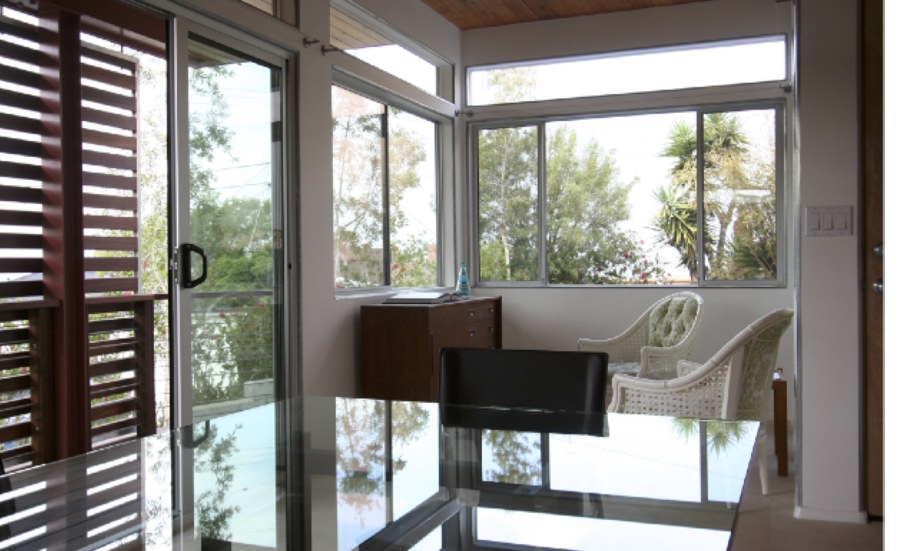 In · one ordinary photo
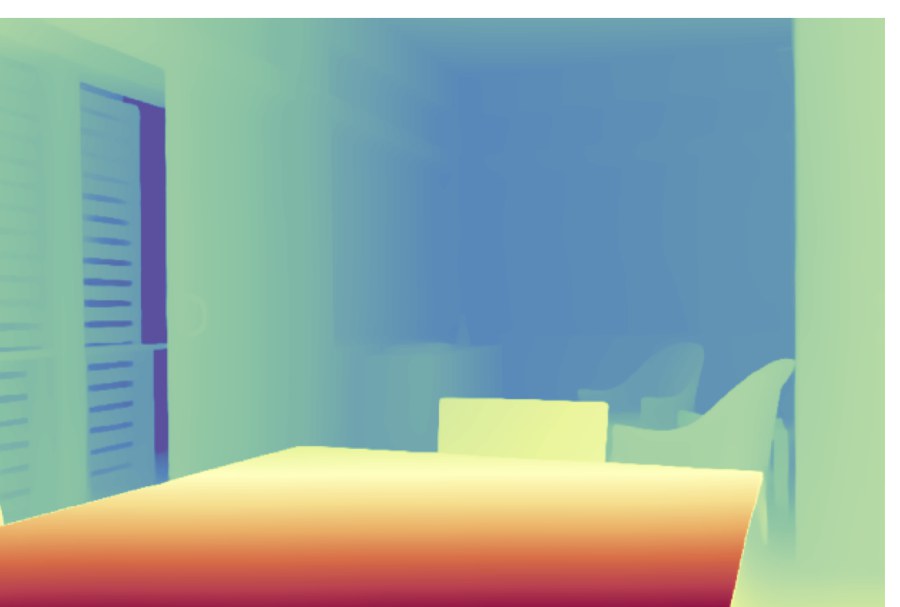 Out · a depth value for every pixel
The output is a depth map: the same picture, but every pixel holds a number instead of a color. Warm means near, cool means far. The numbers are relative, pixel A is nearer than pixel B, and there are no metres anywhere in them.
One RGB photo from any camera. The relative models need nothing else. The metric variants also ask for the camera's focal length, because scale cannot be seen in a single photo.
A map the same size as the photo, one number per pixel. For MiDaS and Depth Anything that number is relative inverse depth: bigger means nearer. It orders the scene, it never says "1.20 m".
Official figures: the Small model has 25M parameters and takes 60 ms per image on a datacenter GPU, the Large 335M and 213 ms. Small versions run on phones. Speed is not the problem, units are.
The key distinction for measurement
Relative depth is not metric depth
This one distinction decides whether AI depth can measure a part. MiDaS and Depth Anything output relative depth: pixel A is nearer than pixel B. They do not say how many metres. A measurement needs metric depth: real units.
Same scene, two kinds of answer
Both maps look identical. Only the right one can answer "how long is this pipe". Metric versions of the AI models exist, and a known-size object like our printed marker can also anchor the scale. The open question is accuracy, and that is what the table below is honest about.
What that means in practice
A rubber ruler: what it can and cannot do
A relative depth map behaves like a ruler printed on rubber. The order of the marks is always right. The spacing between them stretches in ways nobody can know. Here is the same idea, drawn.
Steel tape vs rubber ruler
This is why the marker cannot rescue AI depth. Pinning the rubber ruler at the marker fixes the scale at that one point only, and the stretch everywhere else remains. Published tests confirm it: 12 to 15 percent error stays after marker rescaling, over 10 cm at 1 m. A real measurement needs the whole ruler to be true, and that is what motion depth or a depth sensor provides.
What relative depth can do
- Ordering. "A is nearer than B" is always safe. This powers occlusion in AR.
- Separation. Subject versus background, which is all portrait blur needs.
- Shape. Surfaces and edges, enough for spatial photos and parallax effects.
- Rough warnings. "Something is close ahead" for robots and drones.
- Anywhere. One frame, any camera, no motion, no sensor. Its superpower.
What it cannot do
- A distance or a size. The output contains no metres at all.
- Reliable ratios. "Twice as far" is not guaranteed, only "farther than".
- Comparing two photos. Each map gets its own random scale and shift.
- A steady video readout. Every frame re-normalizes, so values flicker.
- Unfamiliar objects. It guesses from typical sizes, and custom parts have none.
- Being fixed by one marker. One pin fixes one point, the stretch remains.
Proof it is good technology
Where AI depth ships today
Six real products use AI depth right now. Notice the pattern: every one needs to know what is in front of what. None of them needs a certified number in centimetres.
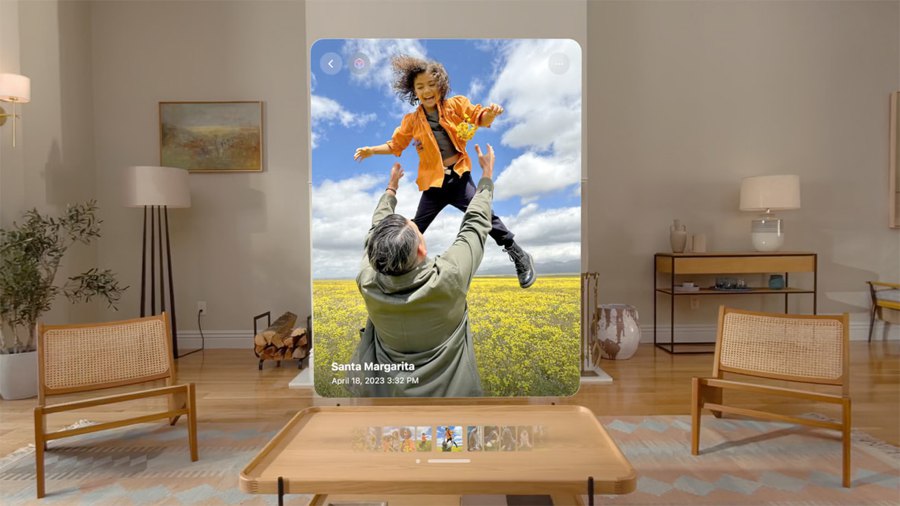
A 2D photo becomes a spatial photo
visionOS 2 infers per-pixel depth with machine learning and builds a left and right eye view from one flat photo. Plausible depth is enough, real metres are not needed.
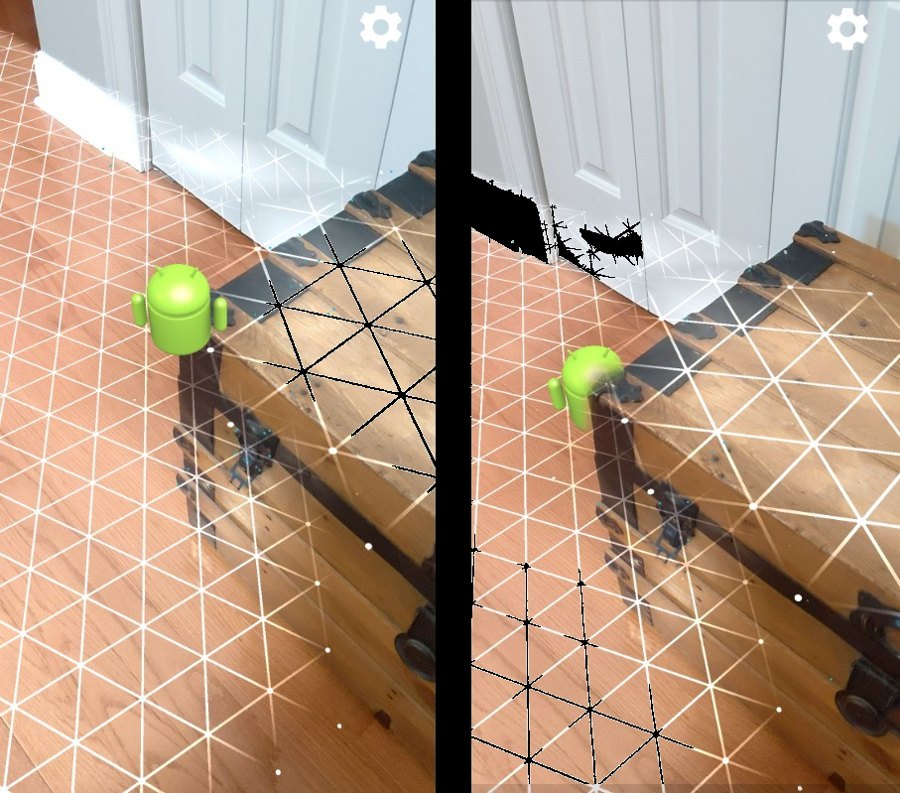
AR occlusion on ordinary phones
The Depth API fuses learned depth with motion depth, so a virtual object correctly hides behind your real table. Off by 10 cm, the occlusion still looks right.
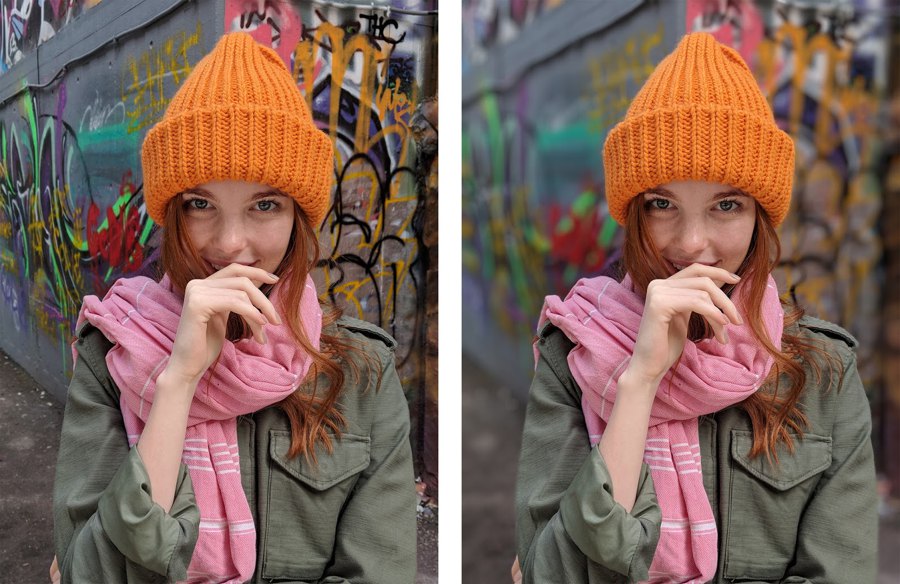
Portrait mode from one lens
Single-camera phones blur the background using an ML depth map. Google's Pixel built portrait mode this way. The blur only needs near versus far ordering.
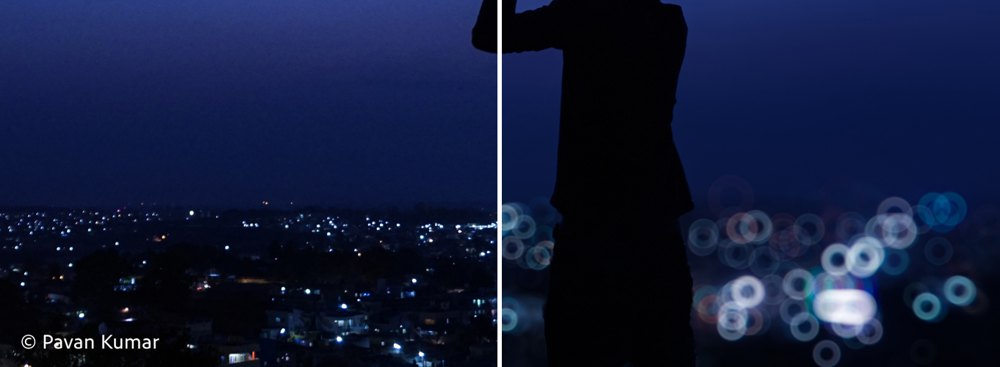
Lens Blur on any photo
Lightroom builds an AI depth map of an ordinary photo, so you can add realistic lens blur long after the shot was taken.

3D motion from a still photo
Depth Anything itself is built by TikTok's parent company ByteDance, and this model family powers parallax style photo motion effects.
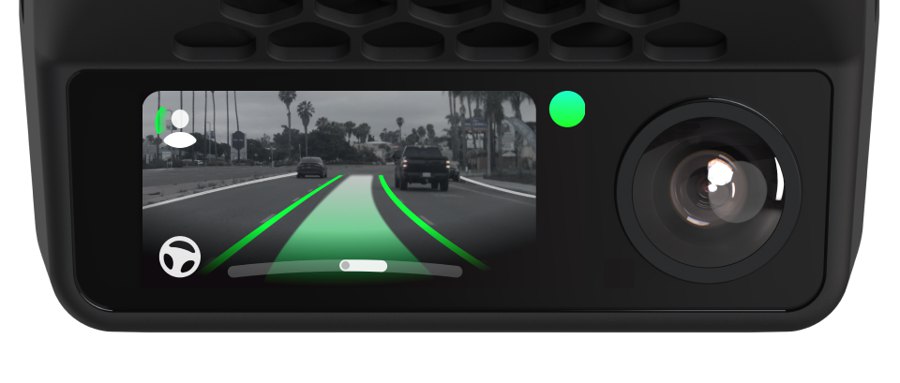
"Is that car within 30 metres?"
Tesla and openpilot estimate depth from cameras with neural networks, at percent-level accuracy, corrected every frame by motion. A range check, not a tape measure.
And where centimetres really matter, the market already chose. Apple's Measure app, room scanners, and furniture-fit apps all use LiDAR or ARKit and ARCore geometry, never AI depth alone. Effects and understanding go to AI depth. Measurement goes to geometry. Our plan sits exactly where the industry landed.
Head to head
Can each way hit ±1-2 cm?
Our bar is rough sizing at ±1-2 cm, validated against a tape measure at 0.5, 1, and 2 metres. Here is where each way stands today. The AI figures below were verified against primary sources in July 2026.
| Method | Real units | Accuracy at 0.5-2 m | Needs | On our devices | Verdict |
|---|---|---|---|---|---|
| Sensor depthLiDAR / ToF | Yes | About 1 cm on small objects | Depth hardware | Quest 3 only | Best accuracy, but no glass in our shortlist carries the sensor. |
| Motion depth + markerARKit / ARCore, our plan | Yes | ±1-2 cm, validated vs tape | Phone + printed marker + movement | Any phone; Aura likely at launch | Our demo method. The marker anchors scale, the tape test proves it. |
| AI depth aloneMiDaS / Depth Anything | No | No real units to be accurate in | One photo + a model | Runs anywhere, small models on phone | Relative only. Great for understanding a scene, not for a tape-measure number. |
| AI metric depthMetric3D v2, ZoeDepth, Depth Pro | Yes | 4-6% of distance in the lab, so 8-12 cm at 2 m. One field test: 45 cm drift | One photo + a larger model + the camera's focal length | Phone yes; glasses SoC to be tested | Real units, but an order of magnitude above our bar on unknown objects. |
| AI depth + our markerhybrid, tested in research | Yes | 12-15% error remains, so over 10 cm at 1 m | One photo + model + printed marker | Would run on any glass | Tempting for RayNeo, but published tests say the marker cannot rescue the accuracy. |
Why not, in one example
The camera cannot see size
Here is the root cause, in one picture. A small pipe close to the camera and a large pipe far from the camera send exactly the same image into the lens. The pixels are identical, so no model, however smart, can read the true size out of them. It can only guess from experience.
Two different realities, one identical photo
Watch the scene switch between the two realities. The camera's image never changes. Human eyes escape this trap by moving (motion depth) or by knowing an object's real size (our printed marker). A single photo has neither, so AI depth guesses the size from what objects usually look like.
What that guess costs
The same 1.20 m pipe, three readouts
Put a real number on it. A worker points the camera at a 1.20 m pipe from 2 metres away and asks for its length. Here is the honest range each method would report, using the verified error rates.
The printed marker in the frame gives true scale. You can order the replacement part from this number.
A 20 cm wide answer. Fine for a photo effect, useless for ordering a part or checking a fit.
The published field benchmark at 1 to 5 metres. The answer is closer to a coin flip than a measurement.
And the factory is the worst case for guessing. AI depth learned typical sizes from millions of photos of people, chairs, doors, and cars. A custom valve or pipe has no typical size, and glossy metal with uniform surfaces gives the model even fewer clues. The client's parts are exactly the objects AI depth is weakest on, and exactly the objects a printed marker handles without caring what they are.
What it means per device
Same question, four answers
Motion depth, built in
ARKit and ARCore ship motion depth as a free platform feature. With our printed marker for scale it reaches ±1-2 cm. This is the October demo method, unchanged.
Real depth sensor
The only shortlist device with hardware depth plus a full SDK. It is the measurement engine option when a headset is acceptable at a fixed station.
No ARCore, no sensor. The phone measures
The X3 Pro cannot run ARCore and has no depth sensor. AI depth was the one glass-only candidate, and the verified numbers rule it out for ±1-2 cm today. So the phone measures, the glass displays the result, and we watch the AI field for the future.
Motion depth, probably at launch
Aura runs Android XR with 6DoF tracking cameras, exactly the ingredients motion depth needs. No depth sensor required. We confirm camera and depth access on the real device at launch, our standard rule.
Straight answers
The two questions, one line each
Is motion depth a sensor or a technology?
A technology. Software triangulates distance from an ordinary moving camera, and the motion sensor supplies real-world scale. No depth hardware involved.
Can the XREAL Aura measure in 3D without a depth sensor?
In principle yes, through motion depth on Android XR. We confirm it on the real device at launch, and we still anchor accuracy with the printed marker and a tape test.
Can MiDaS or Depth Anything measure a part to ±1-2 cm?
No. They output relative depth with no real units, and the verified 2026 numbers close the loopholes: the best metric variants err by 8-12 cm at 2 m in the lab, a real field test drifted 45 cm, and even anchoring with our marker leaves over 10 cm of error. AI depth is a scene-understanding tool, not a measuring tool. Our marker plus motion depth plan stays.
The catch
What to watch out for
- AI depth demos look perfect because relative depth is enough for a beautiful picture. A measurement is a harder promise than a picture.
- The verified head-to-head: the best learned monocular depth measured with 26 cm of error, ARKit with LiDAR 4 cm, and a printed AprilTag about 1 cm. That is a 26x gap between AI depth and our method.
- Lab scores flatter the models. The best 2026 metric models score 4-6% error on benchmarks, which is already 8-12 cm at 2 m, and the one real field test saw the best model drift 45 cm. Factory floors, glossy metal, and unknown cameras make it worse.
- Most metric AI models also need the camera's focal length as input. Get it wrong and the scale silently shifts.
- Whatever the method, our rule stays the same: validate against a tape measure at 0.5, 1, and 2 metres on the real device before promising anything to the client.